FellHerz: Fair, Vegan, and Organic Basics
FellHerz entered the market in 2006, long before 'sustainability' became a mandatory marketing buzzword. Founded in Munich by Beate Fellner and Sonja Herzeg, the brand began as a creative studio focused on graphic screen printing. However, unlike many peers who scaled by compromising ethics, FellHerz followed a trajectory of increasing supply chain rigor. Their evolution moved from simple organic cotton use to a sophisticated partnership with Continental Clothing, specifically utilizing the EarthPositive line as their manufacturing backbone. This strategic alignment allowed a small boutique brand to leverage high-level industrial certifications and decarbonization technologies that are typically out of reach for independent labels. Today, the brand represents a stable, ethics-first business model that prioritizes systemic labor reform and low-impact chemistry over rapid expansion.
Decarbonizing the Supply Chain Through Industrial Symbiosis
The brand’s operational brilliance lies in its procurement strategy. Rather than attempting to audit a fragmented web of small factories, FellHerz sources its base garments from manufacturing hubs in Tirupur, India, and Turkey that operate under Continental Clothing’s carbon-neutral framework. This setup is not merely about carbon offsets; it is about infrastructure. The manufacturing process in India is powered entirely by renewable energy, specifically wind turbines and solar power. By utilizing these 'EarthPositive' blanks, FellHerz can empirically claim a 90% reduction in the carbon footprint of their primary products compared to standard industry equivalents. This upstream decarbonization is coupled with a strict ban on air freight, further insulating the brand’s logistics from high-emission transportation modes.
Radical Labor Ethics and the Living Wage Premium
While many brands hide behind the 'minimum wage' shield, FellHerz engages in one of the most progressive labor initiatives in the textile sector: the Fair Share project. In their Indian production facilities, the brand doesn't just meet legal requirements, which are often insufficient for basic dignity, they pay a 'Living Wage' premium. This is a mathematically calculated addition to the cost of every garment, which is channeled directly into a dedicated fund for worker salaries. For a small Munich label to ensure that a garment worker in India receives a wage that covers nutritious food, housing, healthcare, and education is an achievement that puts most luxury conglomerates to shame. This is verified by the Fair Wear Foundation, where their primary supplier has maintained 'Leader' status for over a decade, representing the highest tier of social compliance.
Material Integrity and Chemical Safety
FellHerz maintains a remarkably clean material profile, dominated by 100% GOTS-certified organic cotton. This choice is critical for two reasons: the elimination of toxic pesticides at the farm level and the reduction of microplastic pollution at the consumer level. By focusing on mono-materials, the brand ensures its garments are naturally biodegradable and technically easier to recycle.
The brand bridges the gap between global ethics and local craftsmanship by performing the final 'value addition' in their Munich studio. This is where the graphic identity of FellHerz is applied through digital and screen printing using GOTS-certified, water-based inks. This avoids the heavy metals and phthalates found in standard plastisol inks, which are notorious for their environmental toxicity and skin-irritation potential.
Logistics and Plastic-Free Packaging
FellHerz extends its environmental scrutiny to the point of delivery. While many sustainable labels still rely on polybags for shipping, FellHerz utilizes packaging made from recycled paper, ensuring the entire fulfillment process remains plastic-free. It is important to note that while the brand offers Furoshiki (traditional Japanese wrapping cloths) within their collection, these are sold as standalone artisanal products rather than utilized as standard shipping packaging. This distinction highlights the brand's commitment to reducing waste while promoting long-lasting, reusable textile goods.
The Circularity Challenge and Material Nuance
Despite the brand’s excellence in sourcing and labor, there is a visible stagnation in post-consumer responsibility. FellHerz operates on a traditional 'sell-and-forget' model without a formalized in-house repair service or structured take-back program. Furthermore, the use of bamboo viscose in their hosiery introduces a slight transparency gap. While bamboo is a renewable crop, the chemical process to turn it into viscose is often intensive; without explicit verification of a closed-loop system for these specific items, it remains a minor 'grey area.' However, the high quality and organic nature of the primary clothing line means they will last significantly longer and degrade safer than fast-fashion alternatives.
Assessing the Animal Welfare Commitment
FellHerz operates as a strictly vegan brand, decoupling style from animal exploitation by ensuring no silk, wool, or leather is used in their collections. While the brand itself holds a vegan-first philosophy, they strategically source base garments from the EarthPositive line, which is officially PETA-Approved Vegan. This commitment extends to the smallest details, ensuring that adhesives and print additives used in their Munich studio are free from animal by-products. By opting for high-weight organic cotton knits over animal-derived fibers like wool, they provide necessary thermal properties without the ethical baggage of the livestock industry.
Audit Conclusion: A Benchmark for Integrity
FellHerz is a rare example of a brand that performs better under the microscope than its modest marketing suggests. They have solved the two hardest problems in fashion: ensuring a real living wage for workers in the Global South and achieving massive carbon reductions at the factory gate. Their reliance on industrial partners like Continental Clothing is a smart, scalable strategy for a small business. While further evolution toward circular services would cement their leadership, their current operations, from GOTS-certified inks to plastic-free recycled packaging, are exemplary. FellHerz is a legitimate 'Good Actor' in an industry filled with smoke and mirrors, offering a blueprint for how small fashion houses can achieve world-class sustainability impact.

 Belgique
 Deutschland
 France
 Italia
 United Kingdom
 Aargau
 Appenzell Ausserrhoden
 Appenzell Innerrhoden
 Basel-Land
 Basel-Stadt
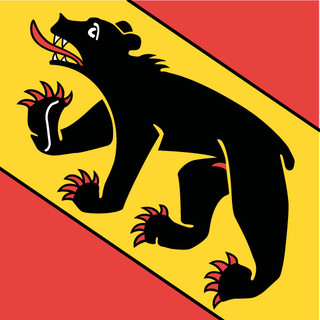 Bern
Bern
 Fribourg
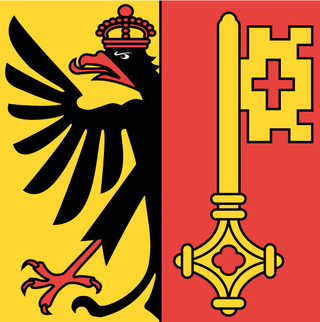 Geneva
 Glarus
 Grisons
 Jura
Jura
 Lucerne
 Nidwalden
 Obwalden
 Thurgau
 Ticino
 Uri
Uri
 Valais
 Vaud
Vaud
 Zug
Zug
 Zurich