Jyoti - Fair Works: Vertically Integrated Social Enterprise
Jyoti - Fair Works operates on a premise that is fundamentally different from 99% of the fashion industry: it was designed as a social enterprise first, and a fashion label second. Founded in 2014 as a German-Indian joint venture, the brand did not simply seek to greenify a standard supply chain; it sought to build a new one. The core mission addresses the systemic exploitation of women in the Indian textile sector, specifically targeting those who are socially marginalized due to caste, religion, or lack of education. By bridging the market power of Berlin with the production heritage of Southern India, Jyoti has constructed a 'solidarity economy' model. This is not charity; it is a rigorous business structure designed to distribute value equitably. The brand’s history is defined by a slow, deliberate evolution from working with NGOs to establishing its own legal manufacturing entity, a move that signals a maturity rarely seen in small ethical labels.
Evolution from Charity to Rights-Based Commerce
The most significant pivot in Jyoti’s timeline occurred between 2020 and 2022. For years, the brand collaborated with NGO partners to employ seamstresses, a common model in fair trade. However, relying on NGOs can sometimes trap workers in a 'beneficiary' status rather than elevating them to 'employees' with statutory power. Recognizing this, Jyoti formalized its Indian operations into JFW LLP (Limited Liability Partnership), based in Hyderabad. This was a structural transformation from a charitable project to a legally compliant labor employer. It meant that the women making the clothes moved from receiving 'aid' to receiving 'rights', specifically, rights under Indian labor law, including provident funds (pensions) and state insurance. This evolution demonstrates a deep understanding that true sustainability requires legal frameworks, not just good intentions. While the brand itself does not hold a B Corp certification, its operations are deeply embedded in the Fair Trade network, partnering with WFTO-verified suppliers and maintaining a governance structure that separates its commercial arm from its non-profit association, Jyoti e.V., to prevent financial conflicts of interest.
Traceability and Supply Chain Visibility
Transparency is often a marketing buzzword, but for Jyoti, it is a risk management strategy. The brand publishes a supplier map that goes beyond the industry standard of listing Tier 1 (Cut & Sew) factories. Because Jyoti is its own Tier 1 factory (via JFW LLP), it has total visibility into the working conditions of its final assembly stage. Beyond this, the brand discloses its Tier 2 suppliers (fabric mills and weavers) with a level of honesty that puts larger brands to shame. A prime example of this integrity is their disclosure regarding Kantis, a supplier in Kutch. Instead of hiding that Kantis uses conventional (non-organic) cotton, Jyoti openly admits it, explaining that they have not yet reached the Minimum Order Quantities (MOQs) required to force a switch to organic yarn. This admission of imperfection is far more trustworthy than a glossy, error-free sustainability report. The supply chain is localized entirely in India (with the exception of Alpaca from Peru and Tencel fiber origin), reducing the logistical carbon footprint and allowing for frequent, personal site visits by the founders.
Sustainability Impact
Jyoti’s environmental strategy is a masterclass in 'appropriate technology.' Rather than seeking high-tech, energy-intensive solutions to sustainability (like chemical recycling of poly-blends), Jyoti looks backward to move forward. A significant portion of their textiles are handwoven. In the context of India’s energy grid, which is heavily reliant on coal, this is a massive decarbonization lever. A handloom requires zero electricity; it is powered entirely by human kinetic energy. This means the weaving phase of production, usually a high-impact stage due to power looms, is effectively carbon neutral. Furthermore, the brand enforces a strict '0% Polyester' policy. In an era where 'recycled polyester' is touted as a savior, Jyoti rejects it entirely, correctly identifying that even recycled synthetics shed microplastics and rely on fossil fuel extraction. By sticking to natural fibers (Cotton, Linen, Silk, Wool, Tencel), the brand ensures that its products do not contribute to the marine microplastic crisis and remain theoretically biodegradable at the end of their life.
Circularity Impact
Most brands treat circularity as an afterthought, usually in the form of a donation bin. Jyoti has integrated it into the business model through Jyoti-Circular. This program is notable for its high incentive structure: customers who return used items receive a voucher worth 50% of the resale value. This is significantly higher than the industry standard (usually 10-15%), effectively bribing the consumer to do the right thing. These returned items are cleaned, repaired, and sold in a dedicated 'Second Hand' section of their Berlin store, normalizing the purchase of pre-loved goods alongside new collections. On the production side, the brand approaches 'Zero Waste' status in its cutting rooms. Fabric scraps are not discarded; larger offcuts become headbands or bowties, while the smallest shreds (under 5cm) are used as stuffing for pillows or toys. This exhaustive utilization of material is only possible because they own their production unit; a third-party factory would likely view such sorting as too costly.
People Impact
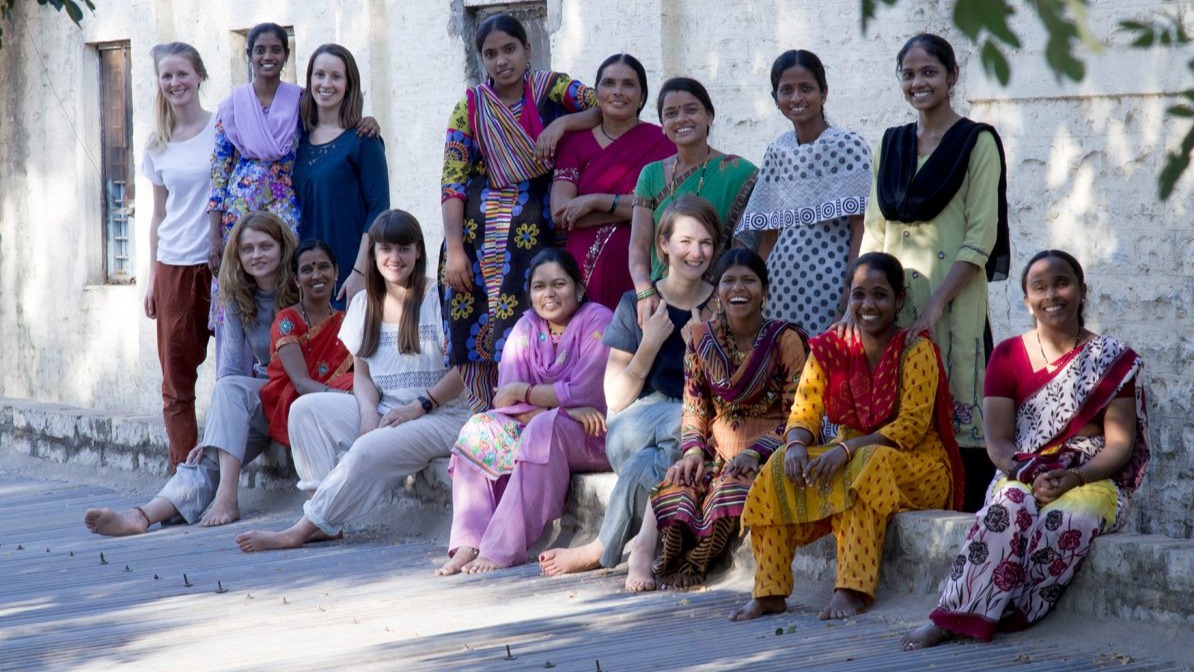
The 'People' pillar is where Jyoti indisputably leads. The fashion industry is notorious for the 'piece-rate' system, where workers are paid pennies per garment, driving them to work dangerously fast and skip breaks. Jyoti rejects this completely. Workers at JFW LLP are employed on permanent contracts with fixed monthly salaries. This provides income security regardless of whether the brand has a slow sales month, transferring the market risk from the vulnerable worker to the company. The benefits package includes health insurance, paid leave, and interest-free loans for emergencies, breaking the cycle of debt bondage common in the region. Beyond economics, the brand invests in 'agency.' Through the associated non-profit Jyoti e.V., workers receive soft-skills training, English lessons, and workshops on women's rights. This suggests a view of the worker not as a 'human resource' to be exploited, but as a human being to be empowered.
Animal Impact
Jyoti’s approach to animal materials is nuanced but lacks the administrative rigor of its labor policies. The brand uses animal fibers, specifically silk and wool, which alienates the strict vegan demographic. However, the sourcing is highly ethical. They utilize 'Peace Silk' (Eri Silk) from Assam, a variety where the moth spins an open-ended cocoon and leaves before harvest, meaning no boiling of live larvae occurs. This supports biodiversity as the silkworms are reared in open forests on castor plants. Their Alpaca wool is sourced from Solid International in Peru, a Fair Trade organization. While these practices are commendable, the brand lacks a consolidated, public Animal Welfare Policy. There is no explicit public ban on mulesing (though their Alpaca sourcing makes it unlikely) or adherence to the Responsible Wool Standard (RWS). For a brand so meticulous about labor documentation, this policy gap is a rare oversight.
Areas for Improvement
Despite its high integrity, Jyoti has room to mature in its data reporting. The current transparency is qualitative (stories, names, locations) rather than quantitative. To compete with larger sustainable players, Jyoti needs to publish a granular impact report detailing precise Scope 1, 2, and 3 carbon emissions, water consumption in liters, and waste diversion rates. The 'Kantis' situation, while honest, represents a physical area for improvement: the brand must continue to push for the scale needed to transition this supplier to organic cotton. Finally, the absence of a formal Animal Welfare Policy document is an easy fix that would significantly boost their rating with ethical aggregators.
Conclusion
Jyoti - Fair Works is a 'Genuine' sustainable brand in a market saturated with imposters. It withstands forensic scrutiny because its sustainability is structural, not cosmetic. By vertically integrating its production through JFW LLP, it has solved the principal-agent problem that plagues the fashion industry, aligning the incentives of the brand with the well-being of the worker. While it may lack the slick data dashboards of venture-backed startups, its reliance on handloom textiles and its refusal to use polyester make it environmentally superior to many 'carbon-neutral' tech-wear brands. Jyoti proves that the most sustainable technology is often the oldest, and the most effective labor policy is simply ownership.

 Belgique
 Deutschland
 France
 Italia
 United Kingdom
 Aargau
 Appenzell Ausserrhoden
 Appenzell Innerrhoden
 Basel-Land
 Basel-Stadt
 Bern
Bern
 Fribourg
 Geneva
 Glarus
 Grisons
 Jura
Jura
 Lucerne
 Nidwalden
 Obwalden
 Thurgau
 Ticino
 Uri
Uri
 Valais
 Vaud
Vaud
 Zug
Zug
 Zurich