Mon Col Anvers: Aesthetic Slow Fashion Limits
Mon Col Anvers emerged in 2016 from the Belgian fashion scene with a value proposition that seems, at first glance, like the antidote to the industry's toxic acceleration. Founded by Eva Juchtmans, the label was built on the intersection of French elegance and Scandinavian minimalism, a stylistic choice that serves a functional purpose: creating 'timeless' garments that resist the planned obsolescence of the trend cycle. By committing to a slow fashion rhythm of just two collections per year, the brand immediately decoupled itself from the hyper-production machinery of the high street. This foundational decision wasn't just about aesthetics; it was a systemic rejection of the 'churn and burn' mentality that defines modern apparel. The history of the brand is one of steady, deliberate growth within the European niche, positioning itself not as a disruptor of technology, but as a custodian of traditional European manufacturing quality and natural material integrity.
Material Integrity and the Pursuit of Low-Impact Certifications
The brand’s evolution is most visible in its increasingly disciplined material palette. Mon Col Anvers has moved beyond merely claiming to be 'natural' to building a supply chain centered on third-party verified fibers. A significant portion of their cotton is GOTS (Global Organic Textile Standard) certified, ensuring that the fiber is grown without synthetic pesticides and processed under social and environmental safeguards. However, the true technical strength of their evolution lies in their embrace of TENCEL™ Lyocell. Unlike generic viscose, which is often linked to deforestation and heavy chemical runoff, Lyocell is produced in a closed-loop system where 99% of the solvent is recovered and reused. This transition signals a move away from the 'low-hanging fruit' of sustainability toward a more sophisticated understanding of textile chemistry. By layering these certifications with the use of deadstock fabrics, the industry’s leftover 'waste', the brand has successfully reduced its reliance on virgin resources, even if the traceability of those deadstock materials remains a structural blind spot.
The European Shield: Traceability and the Intermediary Gap
Today, Mon Col Anvers operates a supply chain anchored in Poland and Portugal, leveraging the 'Made in Europe' tag as a shorthand for ethical production. While producing within the EU provides a higher baseline of labor protection than the garment hubs of Southeast Asia, the brand’s traceability is not as airtight as its marketing suggests. Our analysis reveals that Mon Col Anvers often utilizes a Belgian intermediary to manage its Portuguese manufacturing. This layer of separation creates a 'transparency gap' where the brand may not have direct, daily oversight of the factory floor or the sub-contractors involved. They publish the countries of origin but fail to disclose the specific names and addresses of their Tier 1 factories. In an era where radical transparency is becoming the gold standard, simply pointing to a European border is no longer sufficient; a truly responsible brand must map the path from the sewing machine to the consumer’s wardrobe with granular precision.
Quantifying the Sustainability Impact: Beyond the Hype
When we strip away the minimalist imagery, the environmental impact of Mon Col Anvers is defined by what is missing as much as what is present. By strictly avoiding synthetic fibers like polyester and nylon, the brand has effectively eliminated its contribution to the microplastic crisis, a massive achievement considering that a single synthetic wash can release over 700,000 fibers into the ocean. Their use of natural mono-materials is a technical masterstroke that simplifies the end-of-life process. However, the 'impact' narrative hits a wall when it comes to climate accounting. There is a total absence of public data regarding their Scope 1, 2, and 3 greenhouse gas emissions. Without measuring the carbon footprint of their logistics or the energy matrix of their Polish factories, the brand is essentially flying blind. We cannot manage what we do not measure, and the lack of a formal decarbonization roadmap remains the brand's most significant environmental liability.
Circularity and the Rental Revolution
Circularity is where Mon Col Anvers moves from being a traditional slow-fashion player to a forward-thinking participant in the new economy. Their partnership with the Belgian rental platform Dressr is a textbook example of how a brand can monetize utility rather than just ownership. By making their high-quality garments available for rent, they extend the life cycle of each piece and reduce the 'per-wear' environmental cost. This is further supported by their presence on Loopli, which facilitates discovery for circular-minded consumers. While the brand lacks an in-house repair workshop or a proprietary take-back scheme, their design philosophy, focusing on durable construction and mono-fibers, builds circularity into the very DNA of the product. They aren't just selling clothes; they are designing assets that are physically capable of being recycled or reused, which is a rare find in a market flooded with low-quality poly-blends.
Evaluating the Planetary Footprint
The planetary impact of Mon Col Anvers is anchored in a low-volume, high-quality production model. By releasing only two collections a year, they avoid the massive overstock issues that lead to landfilling and incineration in the fast-fashion sector. Their packaging strategy also deserves scrutiny; the use of water-soluble bags for shipping is a bold attempt to tackle the plastic waste crisis. While we remain skeptical of the real-world conditions required for these bags to safely biodegrade without leaving chemical residues, it shows a willingness to experiment with upstream solutions. However, the brand has yet to address its water footprint in a meaningful way. While Lyocell is water-efficient, the dyeing and finishing of their GOTS cotton still requires significant liquid inputs, and without ZDHC-level reporting from their European mills, the actual impact on local watersheds remains an unknown variable.
The People Behind the Seams
The 'People' impact of the brand is currently shrouded in 'European exceptionalism.' The brand relies heavily on the assumption that European Social Law is a sufficient guarantor of worker welfare. While Poland and Portugal have stronger legal frameworks than many global garment exporters, these regions are not immune to labor exploitation, particularly regarding overtime and the 'living wage gap.' A living wage is not the same as a minimum wage; it is a calculated amount that covers a family's basic needs. Mon Col Anvers provides no evidence that it audits its suppliers for living wage compliance or that it has a direct relationship with the workers in its Tier 1 factories. For a brand that positions itself as an ethical alternative, this lack of active social governance is a missed opportunity to lead the industry toward true labor justice.
Animal Welfare and the Silk Contradiction
Mon Col Anvers is not a vegan brand, and its animal impact is a mixed bag. They successfully avoid the most egregious offenders, fur, exotic skins, and leather, which significantly lowers their 'biodiversity risk' and eliminates the high-carbon footprint associated with cattle ranching. However, independent audits have highlighted the use of silk in their collections. Silk production is an animal-derived process that often lacks the rigorous welfare certifications seen in the wool or down industries (like RWS or RDS). Without a formal animal welfare policy or a PETA-approved vegan certification, the brand occupies a grey area. Consumers looking for a strictly cruelty-free wardrobe should be aware that while the brand is 'animal-friendly' compared to luxury peers, it is not yet fully committed to a vegan material strategy.
Structural Vulnerabilities and Areas for Improvement
The most urgent area for improvement is the professionalization of their data transparency. Mon Col Anvers needs to move beyond storytelling and into accounting. This starts with a full Tier 1 and Tier 2 factory disclosure, naming the actual facilities where their garments are cut and sewn. Secondly, they must begin the process of carbon mapping. In a world of tightening CSRD regulations, small brands can no longer hide behind their size; they need to quantify their emissions and set science-based targets. Finally, the brand should formalize its circularity by introducing an in-house repair service or a resale platform for 'pre-loved' Mon Col pieces. Closing the loop should not be the responsibility of a third-party partner alone; it must be a core service offered by the brand itself to truly claim the title of a circular leader.
Final Verdict: A Beacon of Aesthetic Responsibility
Mon Col Anvers is a brand that truly understands the 'slow' in slow fashion. Their commitment to natural mono-materials and European production makes them an elite choice for consumers who value longevity and style over the fleeting dopamine hit of a cheap purchase. Their outstanding achievement is their material discipline; by refusing to use virgin synthetics, they have built a collection that is both beautiful and microplastic-free, a feat that many larger 'sustainable' brands have failed to accomplish. While they have significant work to do in terms of carbon data and deep-tier transparency, their foundation is solid. They are a brand with a conscience, proving that it is possible to create high-fashion aesthetics without the high-fashion environmental price tag. For the conscious consumer, Mon Col Anvers offers a rare blend of European craftsmanship and genuine circular intent, making them one of the most credible mid-sized players in the Belgian sustainable landscape today.

 Belgique
 Deutschland
 France
 Italia
 United Kingdom
 Aargau
 Appenzell Ausserrhoden
 Appenzell Innerrhoden
 Basel-Land
 Basel-Stadt
 Bern
Bern
 Fribourg
 Geneva
 Glarus
 Grisons
 Jura
Jura
 Lucerne
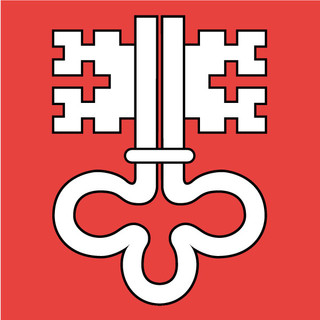 Nidwalden
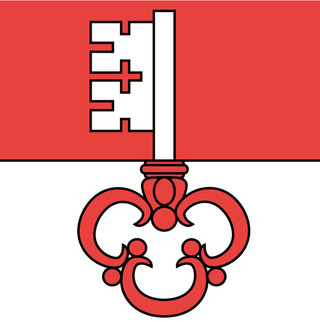 Obwalden
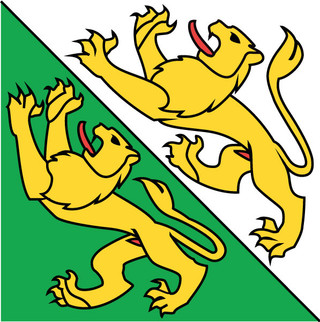 Thurgau
 Ticino
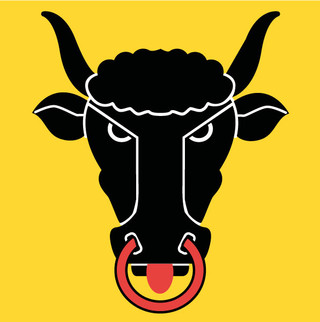 Uri
Uri
 Valais
 Vaud
Vaud
 Zug
Zug
 Zurich